Prime time for liquid biopsies: from feasibility to action
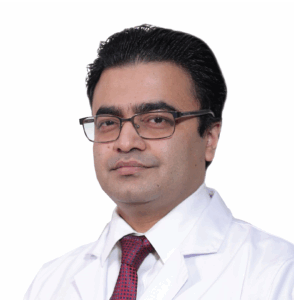
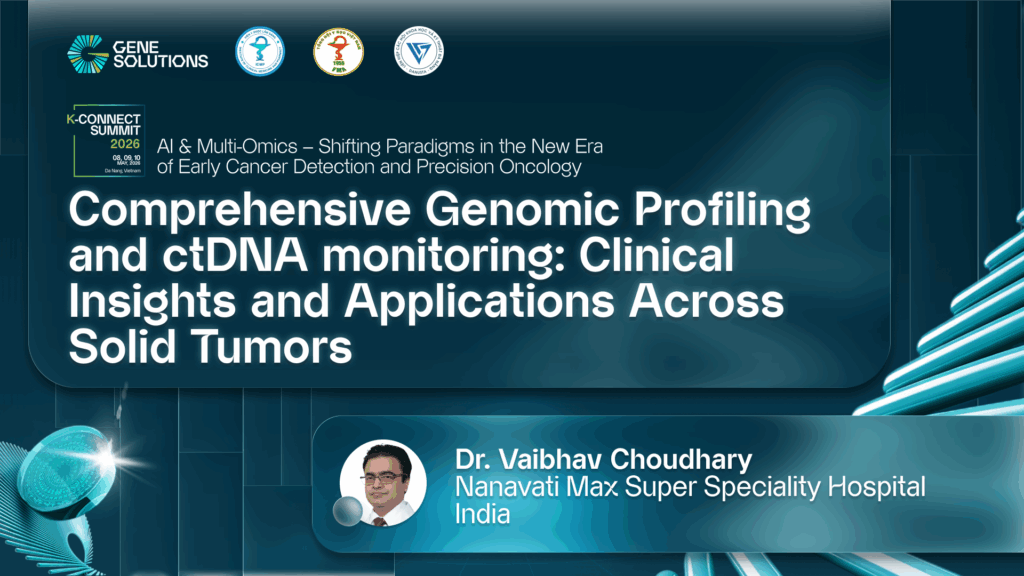
Dr. Vaibhav Choudhary (Nanavati Max Super Specialty Hospital, India) offered a decade‑spanning perspective on the evolution of liquid biopsy in precision oncology. He noted: “A decade ago, we were asking whether comprehensive genomic profiling (CGP) was ready for prime time. Today, we are asking whether we should act on ctDNA-MRD.”
Dr. Choudhary described ctDNA as “real‑time genomic interrogation,” capable of revealing tumor heterogeneity that a single-site tissue biopsy may miss, particularly as tumors evolve under therapy. He highlighted two critical clinical roles: (1) blood‑based CGP for actionable alterations when tissue is limited or time is critical, and (2) Minimal/Molecular residual disease (MRD) assays for ultrasensitive longitudinal monitoring, often surfacing relapse risk, months before imaging changes.
He reinforced a ‘both/and’ model rather than ‘either/or’: tissue for histopathology and established biomarkers; ctDNA for repeatable surveillance and detection of emerging resistance. As he stated: “the beauty of liquid biopsy is that it can represent all the stages of the disease.”
Dr. Choudhary also outlined important guardrails—including low‑shedding tumors, pre‑analytical variation, and confounding from clonal hematopoiesis (CHIP)—and stressed the need for technical rigor to minimize false negatives and misinterpretation. He pointed to accelerating advances—multi-omics integration, fragmentomics, and AI-assisted analysis as key drivers steadily improving sensitivity and specificity.
<iframe width="560" height="315" src="https://www.youtube.com/embed/TOes9JmRh6M" title="CGP & ctDNA monitoring: Clinical Insights & Applications Across Solid Tumors" frameborder="0" allow="accelerometer; autoplay; clipboard-write; encrypted-media; gyroscope; picture-in-picture; web-share" referrerpolicy="strict-origin-when-cross-origin" allowfullscreen></iframe>