- Version
- Download 0
- File Size 4.00 KB
- File Count 1
- Create Date August 7, 2026
- Last Updated August 7, 2026
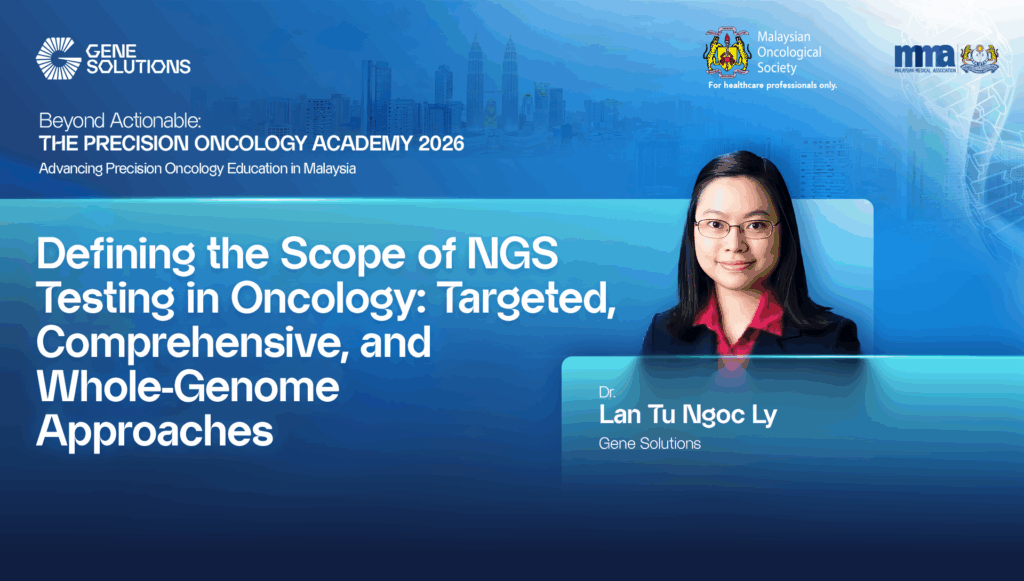
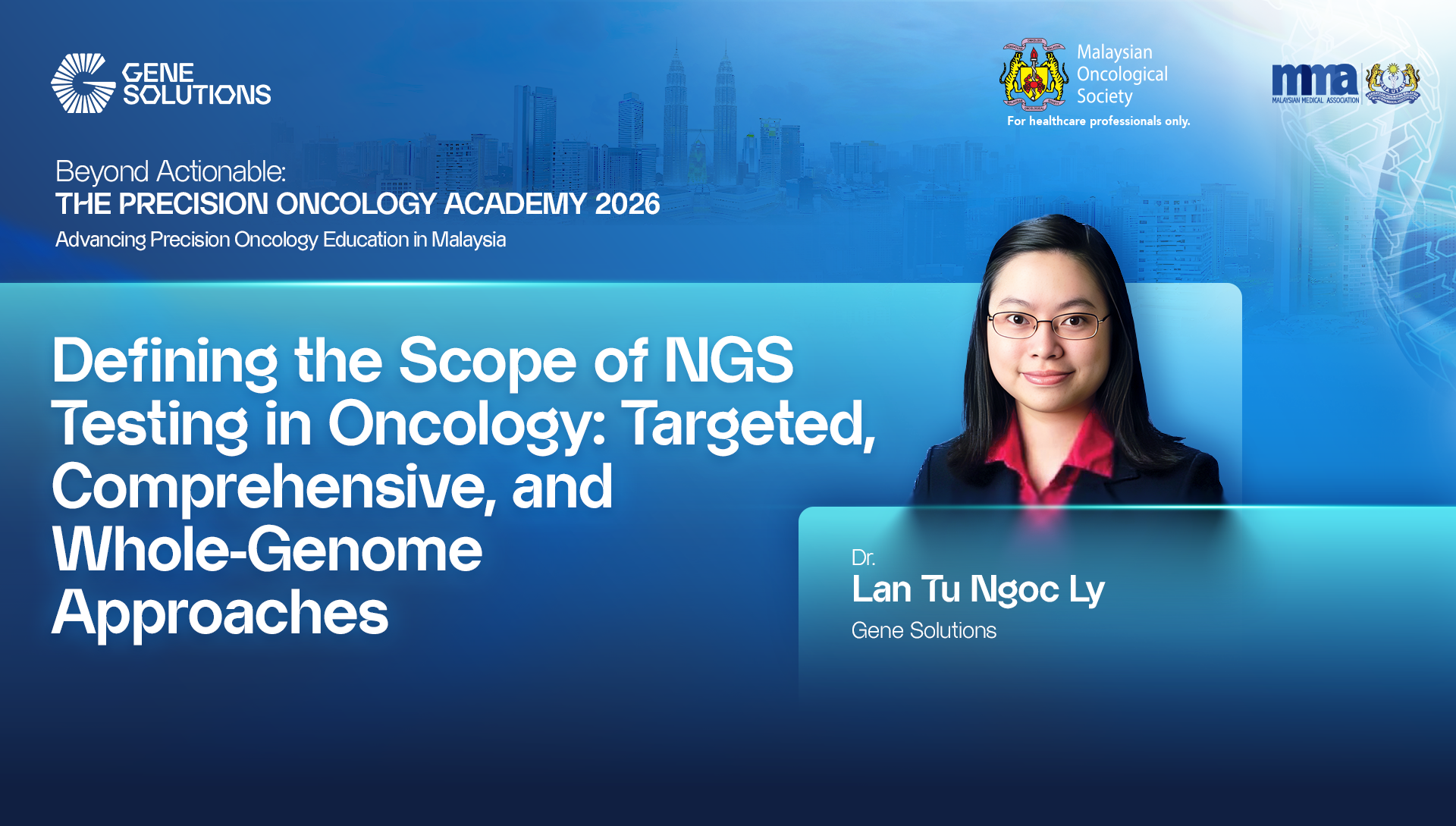
Defining the Scope of NGS Testing in Oncology: Targeted, Comprehensive, and Whole-Genome Approaches
Dr. Lan Tu explores how selecting the appropriate NGS strategy—from targeted panels to whole-genome sequencing—can maximize clinically actionable insights while balancing cost, turnaround time, and real-world implementation in precision oncology.
In this scientific session, Dr. Lan Tuexamines the expanding role of next-generation sequencing (NGS) across tumour tissue profiling, liquid biopsy, and ctDNA-based minimal residual disease (MRD) detection. The presentation compares targeted gene panels, comprehensive genomic profiling, whole exome sequencing (WES), and whole genome sequencing (WGS), discussing how panel size, sequencing depth, and limit of detection influence diagnostic performance, biomarker detection, and clinical utility. Rather than assuming that larger panels or deeper sequencing always produce better results, Dr. Lan highlights the importance of selecting testing strategies that generate meaningful clinical information within practical cost and turnaround time constraints.
The session also explores how integrated molecular profiling is reshaping precision oncology. Combining DNA and mRNA sequencing improves fusion detection and transcriptomic analysis, while liquid biopsy complements tissue testing by capturing tumour heterogeneity, monitoring treatment response, identifying resistance mutations, and enabling ctDNA-MRD surveillance after curative treatment. Emerging MRD technologies—including genome-wide mutation signatures, phased variants, and machine learning—are presented as promising approaches to further improve detection sensitivity for molecular residual disease.
Dr. Lan concludes by emphasizing that the future of precision oncology lies not in simply generating more genomic data, but in integrating multiple biomarkers, sample types, pathology, imaging, and clinical information to deliver actionable insights. The ultimate goal is to maximize clinical value while maintaining reasonable cost, turnaround time, and interpretability for routine oncology practice.
<iframe width="1840" height="1035" src="https://www.youtube.com/embed/iriKPY9ZzzA" title="" frameborder="0" allow="accelerometer; autoplay; clipboard-write; encrypted-media; gyroscope; picture-in-picture; web-share" referrerpolicy="strict-origin-when-cross-origin" allowfullscreen></iframe>