
- Version 1.0
- Download 70
- File Size 2 GB
- File Count 1
- Create Date May 12, 2025
- Last Updated December 10, 2025
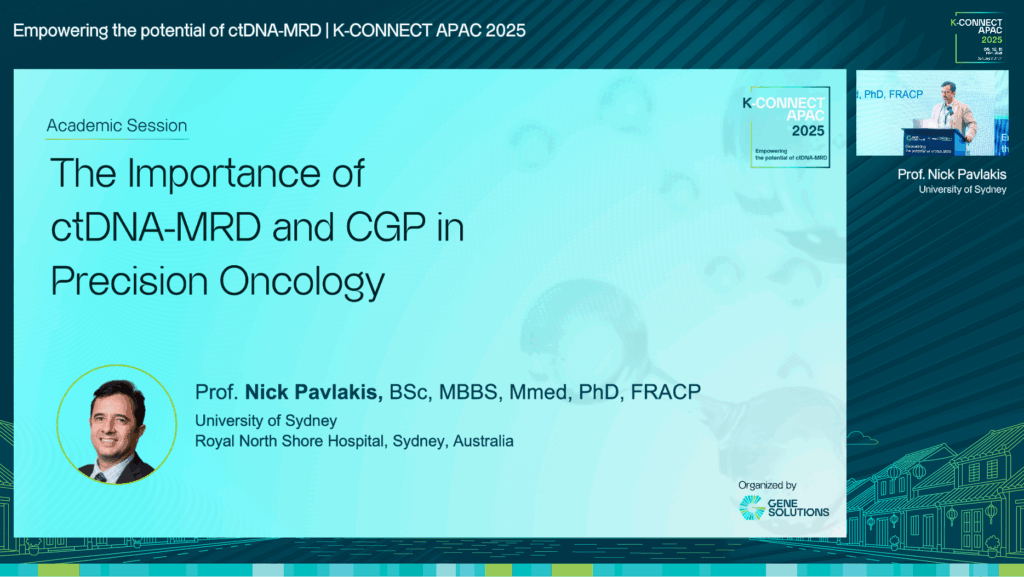
The Importance of ctDNA-MRD and CGP in Precision Oncology
In this data-rich presentation, Prof. Nick Pavlakis delivered a comprehensive overview of ctDNA-MRD, highlighting clinical trial evidence, standardized assay requirements, and the latest trends in regulatory guidance and global adoption.
To support clinical integration, he referenced practical frameworks from the Japan Society of Clinical Oncology(JSCO) and the NCCN. These include scenario-based recommendations such as using MRD testing forrecurrence risk assessment and surveillance after curative-intent resection, considering adjuvant therapy in MRD-positive postoperative patients based on tumor type, and applying MRD analysis following non-surgical curative treatments to guide monitoring for disease progression.
Through these shared insights, Prof. Pavlakis encouraged thoughtful reflection on how ctDNA-MRD—and tumor-informed assay can contribute meaningfully to the ongoing advancement of precision oncology inclinical practice.