- Version
- Download 0
- File Size 4.00 KB
- File Count 1
- Create Date August 6, 2026
- Last Updated August 7, 2026
Core Concepts in Cancer Genomics: A Clinician’s Perspective
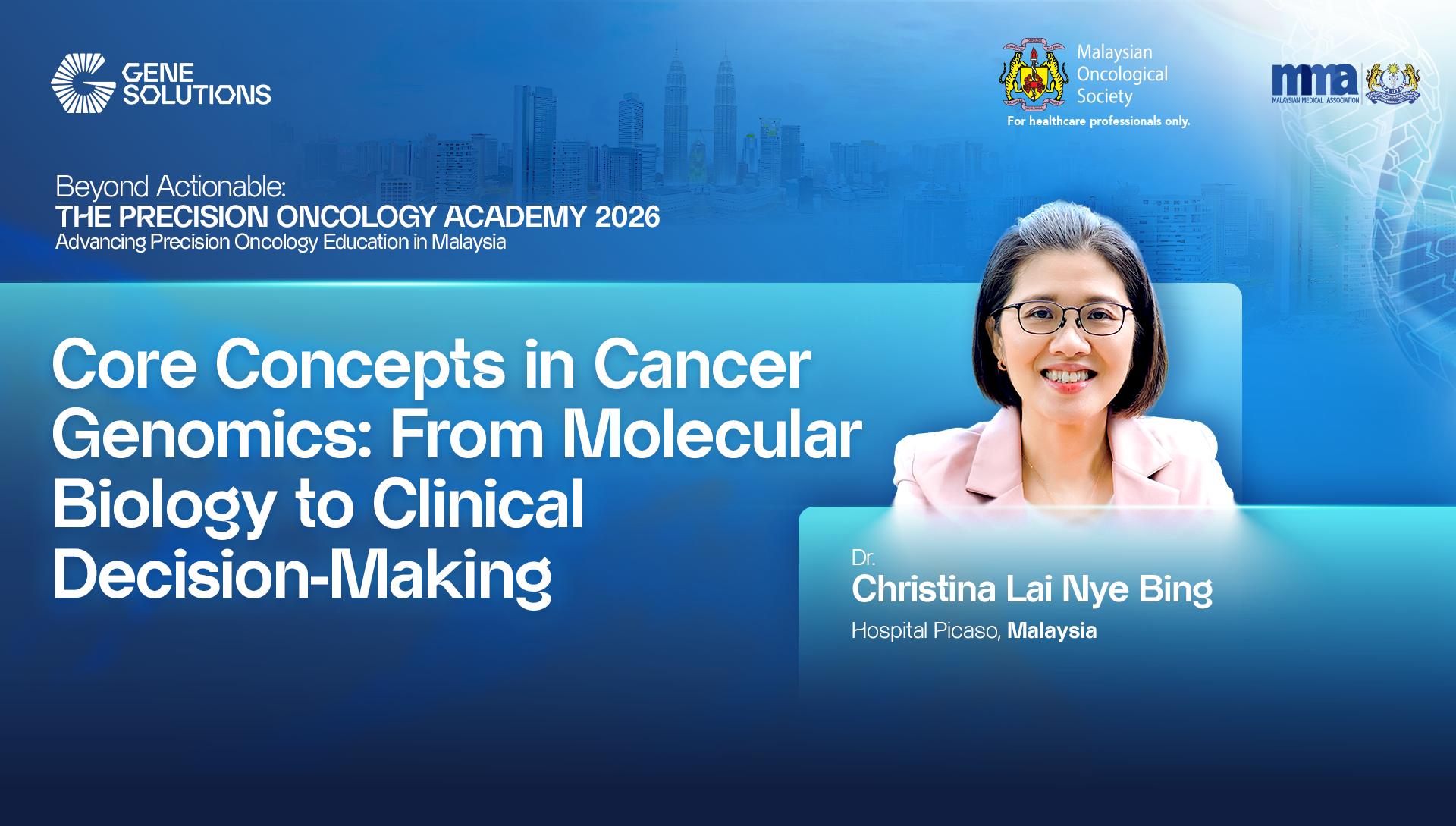
Dr. Christina Lai provides a practical foundation in cancer genomics, explaining how genomic alterations drive cancer development and how molecular profiling enables clinicians to make more precise, biology-driven treatment decisions across multiple tumour types.
In this educational session, Dr. Christina Lai introduces the fundamental principles of cancer genomics and their growing impact on modern oncology practice. Beginning with the biology of cancer, she explains how genomic alterations—including single nucleotide variants, insertions and deletions, copy number alterations, structural rearrangements, and epigenetic changes—contribute to tumour development and progression. The presentation distinguishes key concepts such as oncogenes versus tumour suppressor genes, driver versus passenger mutations, and germline versus somatic alterations, highlighting their distinct clinical implications for treatment selection and hereditary cancer risk assessment.
The session then demonstrates how advances in next-generation sequencing (NGS) have shifted oncology from a histology-based approach to precision medicine, where treatment is increasingly guided by actionable molecular biomarkers. Using examples from lung, breast, colorectal, gastric, ovarian, and endometrial cancers, Dr. Christina illustrates how genomic profiling informs targeted therapy, immunotherapy, and biomarker-directed treatment strategies across different tumour types.
Finally, the presentation addresses common challenges encountered in clinical practice, including interpretation of variants of uncertain significance (VUS), variant allele frequency (VAF), tumour heterogeneity, acquired treatment resistance, and equitable access to genomic testing. Dr. Christina concludes that while molecular testing continues to evolve, genomic findings must always be interpreted alongside pathology and clinical context, reinforcing that precision oncology is rapidly becoming standard oncology.
<iframe width="1840" height="1035" src="https://www.youtube.com/embed/FRanrt5OE08" title="" frameborder="0" allow="accelerometer; autoplay; clipboard-write; encrypted-media; gyroscope; picture-in-picture; web-share" referrerpolicy="strict-origin-when-cross-origin" allowfullscreen></iframe>