The “gray zone” in lung screening—and why biology may help
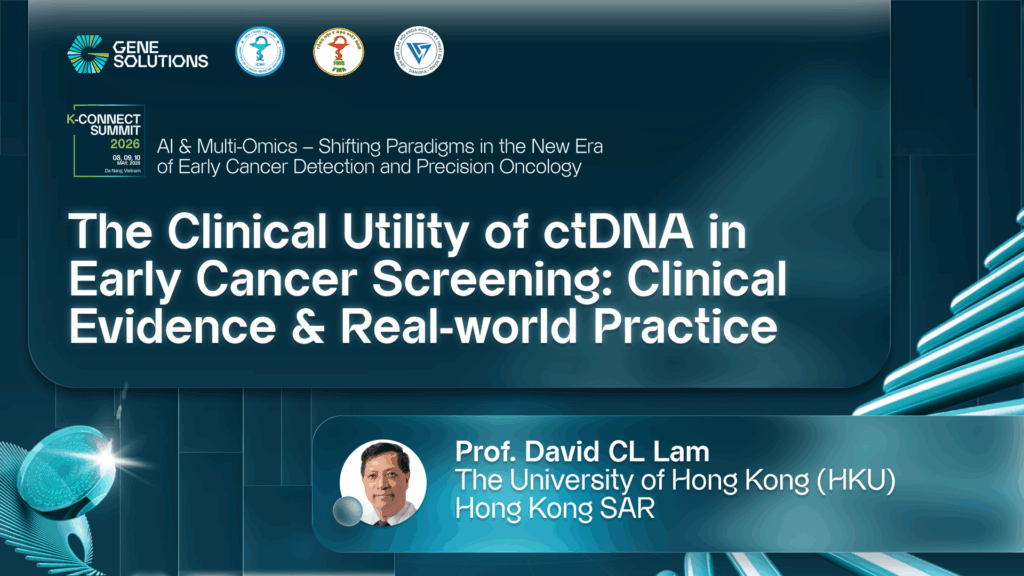
Prof. David CL Lam (The University of Hong Kong, Hong Kong) addressed a common clinical reality: the goal of identifying at-risk individuals before symptoms appear, when disease remains potentially curable, yet current tools leave substantial gray zones. While low‑dose CT (LDCT) has improved early lung cancer detection, it also generates a high volume of incidental findings that are difficult to interpret decisively. Prof. Lam noted that nearly 30% of patients undergoing CT for unrelated reasons can present with incidental lung nodules—many are clinically ambiguous.
It is in this gray zone where circulating tumor DNA (ctDNA) and multi‑omics approaches may offer incremental meaningful value. Prof. Lam further highlighted that detecting ctDNA in blood or other body fluids has historically been challenging, especially in early-stage cancers where tumor burden is still minimal. He noted that what is changing is not a single breakthrough, but an accumulation of progress:
“Ongoing advances in biomarker discovery and emerging technologies are creating new opportunities to enhance the effectiveness of early lung cancer detection, particularly through circulating tumor DNA (ctDNA).”
He summarized the session: “The purpose of having multi‑omics compared to the single omics ctDNA technologies is to improve the sensitivity and the specificity of earlier detection of lung cancer.”
Crucially, Prof. Lam positioned multi-omic ctDNA‑based testing—particularly single -cancer early detection (SCED) and multi-cancer early detection (MCED) approaches integrating multi-omics technologies and artificial intelligence (AI)—not as a replacement for LDCT, but as a decision support tool, especially for individuals with suspicious lung nodules where the clinical question is the risk of progression to lung cancer. He shared that his team is actively studying such AI-powered multi-omic ctDNA assays in patients with suspicious lung nodules, with further results expected soon.
<iframe width="560" height="315" src="https://www.youtube.com/embed/-AjSqhqI3j4" title="The Clinical Utility of ctDNA in Early Cancer Screening: Clinical Evidence & Real-world Practice" frameborder="0" allow="accelerometer; autoplay; clipboard-write; encrypted-media; gyroscope; picture-in-picture; web-share" referrerpolicy="strict-origin-when-cross-origin" allowfullscreen></iframe>